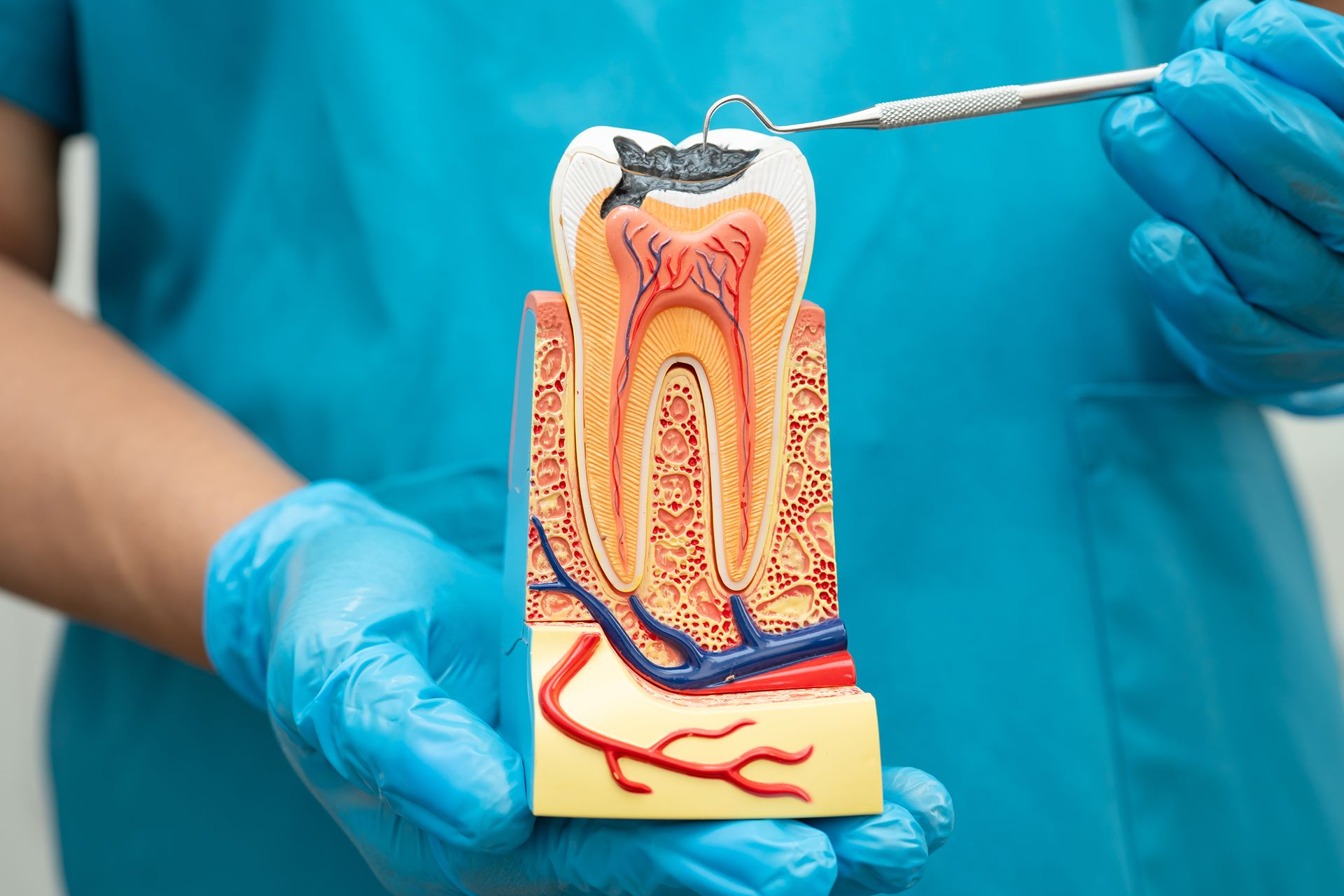
If your dentist has recommended a root canal, one of the first questions that probably comes to mind is, "How long does a root canal take?" It’s a fair question. Between work, family responsibilities, and everyday life, knowing what to expect can make planning your appointment much easier.
The good news is that modern root canal treatment is far more comfortable and efficient than many people imagine. Thanks to advanced technology and improved techniques, most root canals can be completed in a single visit, while more complex cases may require a second appointment.
At True Dental in Schertz, TX, we believe that understanding your treatment helps reduce anxiety and gives you confidence in your dental care. In this guide, we'll explain how long a root canal takes, what affects the treatment time, and what you can expect before, during, and after the procedure.
So, How Long Does a Root Canal Take?
The average answer to how long a root canal takes is 60 to 90 minutes. For many patients, that's all it takes to remove the infected tissue, clean the inside of the tooth, and seal it to prevent future infection.
However, every tooth is different. Some simple cases can be completed in as little as 45 minutes, while more complicated treatments may last up to two hours or require a second visit.
The total time depends on several factors, including:
-
Which tooth is being treated
-
The severity of the infection
-
The number of root canals inside the tooth
-
Whether retreatment is needed
-
Your overall oral health
Your dentist will evaluate these factors before beginning treatment and explain what to expect for your specific case.
Why Do Some Root Canals Take Longer Than Others?
Many patients wonder why the answer to how long a root canal takes isn't always the same. The reason is that no two teeth are exactly alike.
Front Teeth
Front teeth usually have a single root canal, making them the quickest teeth to treat. These procedures often take between 45 and 60 minutes.
Premolars
Premolars generally have one or two canals. Treatment usually lasts around 60 to 90 minutes.
Molars
Molars are the largest teeth and often contain three or four canals. Because they are located farther back in the mouth and have a more complex structure, treatment may take 90 minutes to two hours.
What Happens During a Root Canal?
Knowing what happens during the procedure often helps patients feel more comfortable.
Step 1: Examination and Digital X-Rays
Your dentist begins by examining your tooth and taking digital X-rays to identify the infection and map the root canals.
Step 2: Local Anesthesia
The area is completely numbed to ensure you remain comfortable throughout the procedure. Most patients report feeling pressure but very little, if any, pain.
Step 3: Cleaning the Tooth
A small opening is created in the tooth to remove the infected pulp. Specialized instruments carefully clean and shape each canal.
Step 4: Disinfection
The canals are thoroughly disinfected to eliminate bacteria and reduce the chance of future infection.
Step 5: Filling and Sealing
Once cleaned, the canals are filled with a biocompatible material and sealed to protect the tooth.
Step 6: Final Restoration
Many teeth, especially molars, require a dental crown after the root canal to restore strength and protect against fractures.
Can a Root Canal Be Completed in One Visit?
Yes. In many cases, the answer to how long a root canal takes is simply one appointment.
Advances in dental technology allow dentists to diagnose, clean, and seal many teeth during a single visit. However, if the infection is extensive or swelling is present, your dentist may place medication inside the tooth and schedule a second appointment.
This approach helps ensure the infection is completely eliminated before the final seal is placed.
Factors That Affect Root Canal Treatment Time
Several factors can influence how long a root canal takes for your individual case.
Tooth Location
Front teeth are generally faster to treat than molars because they contain fewer canals.
Infection Severity
A deep infection may require additional cleaning or medication between visits.
Previous Root Canal Treatment
If a tooth has already undergone root canal therapy and requires retreatment, the procedure is often more time-consuming.
Tooth Anatomy
Some teeth have curved or unusually narrow canals that require extra precision and additional treatment time.
Dental Technology
Modern imaging systems and precision instruments allow experienced dentists to complete treatment more efficiently while maintaining exceptional accuracy.
Is a Root Canal Painful?
One of the biggest misconceptions about root canals is that they are painful.
In reality, today's root canal procedures are designed to relieve pain—not cause it. Local anesthesia keeps the area numb throughout treatment, and many patients compare the experience to receiving a routine dental filling.
After the procedure, mild soreness or sensitivity is normal for a few days and can usually be managed with over-the-counter pain medication.
Recovery After a Root Canal
Recovery is typically straightforward.
Most patients return to work or their normal activities the same day or the following morning.
To help your tooth heal:
-
Avoid chewing on the treated tooth until your permanent restoration is placed.
-
Brush and floss as usual.
-
Take any prescribed medications exactly as directed.
-
Attend your follow-up appointment if a crown is recommended.
Proper aftercare helps ensure your treated tooth lasts for many years.
How Long Does a Root Canal Last?
A properly treated and restored tooth can last decades, and in many cases, even a lifetime.
The key to long-term success includes the following:
-
Excellent oral hygiene
-
Regular dental cleanings
-
Routine dental examinations
-
Wearing a nightguard if you grind your teeth
-
Getting a dental crown when recommended
Maintaining these healthy habits protects both the treated tooth and your overall oral health.
When Should You Schedule a Root Canal?
Ignoring tooth pain can allow infection to spread and lead to more complicated treatment.
Common signs you may need a root canal include:
-
Persistent tooth pain
-
Pain when chewing
-
Sensitivity to hot or cold that lingers
-
Swollen gums
-
A darkened tooth
-
A recurring pimple on the gums
If you're experiencing any of these symptoms, it's best to seek treatment as soon as possible.
Why Choose True Dental for Root Canal Treatment?
At True Dental in Schertz, TX, patient comfort is always our priority. Our experienced dental team combines advanced technology with compassionate care to provide precise, efficient root canal treatment in a welcoming environment.
From digital imaging to personalized treatment planning, we focus on preserving your natural teeth whenever possible while making every visit as stress-free as we can.
Whether you need a routine evaluation or a second opinion, we're here to answer your questions and help you make informed decisions about your dental health.
Final Thoughts
So, how long does a root canal take? For most patients, the procedure lasts between 60 and 90 minutes, although more complex cases may require additional time or a second appointment. The exact length depends on the tooth being treated, the severity of the infection, and your individual dental needs.
The important thing to remember is that a root canal is designed to eliminate pain, save your natural tooth, and restore your oral health. With modern dental techniques, treatment is more comfortable and efficient than ever before.
If you're experiencing tooth pain or have been told you may need a root canal, don't wait. Contact True Dental in Schertz, TX, to schedule an evaluation and receive expert, patient-focused care that puts your smile first.